Newsletter Subscribe
Enter your email address below and subscribe to our newsletter

 ByJohn A
When firefighters enter a smoke-filled building, every second matters. Heavy smoke, darkness, flames, and structural obstacles can make it difficult to identify people, locate fire sources, and navigate safely. A firefighter thermal camera for search and rescue provides an important advantage by detecting heat rather than relying only on visible light. This allows responders to identify temperature differences and recognize objects or people that may otherwise be difficult to see.
Modern thermal imaging technology has become an important tool for emergency response. With suitable equipment such as solutions from Guide Sensmart, firefighters can improve situational awareness during challenging search and rescue operations while making faster, more informed decisions.
Traditional visual observation can become extremely limited during a fire. Smoke can reduce visibility to only a short distance, while darkness can make it difficult to distinguish people, walls, doors, and other obstacles. Flames may further complicate the situation by creating intense glare and rapidly changing conditions.
A firefighter thermal camera approaches the problem differently. Instead of depending primarily on visible light, thermal imaging detects infrared radiation emitted by objects. Materials with different temperatures appear as contrasting areas on the thermal display.
This difference can help firefighters recognize potential heat sources and identify people even when normal visibility is poor. The ability to obtain useful thermal information can make search procedures more efficient and provide responders with additional information about their surroundings.
One of the most important applications of thermal imaging in rescue work is locating people in hazardous environments. A person generally has a different thermal signature from many surrounding objects. A thermal camera can display this temperature difference, helping responders identify a potential human presence.
During a building search, firefighters may need to inspect rooms, corridors, stairways, and other areas quickly. A thermal camera can support this process by providing thermal information that complements conventional visual observation.
This does not eliminate the need for careful searching. Instead, it gives firefighters another method for detecting possible occupants and prioritizing areas that require immediate attention.
Smoke is one of the biggest obstacles during an interior fire response. Even with protective equipment and lighting, visibility may remain limited. Thermal imaging can provide useful information in these conditions because it is based on heat patterns rather than ordinary illumination.
A firefighter thermal camera can help reveal warmer areas against cooler backgrounds. For example, a person behind or within a smoke-filled area may produce a recognizable thermal contrast. Similarly, heated doors, walls, ceilings, and other surfaces can provide clues about conditions beyond the firefighter’s immediate visual field.
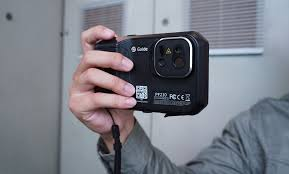
Guide Sensmart develops thermal imaging solutions designed to provide clear thermal information for demanding applications. For emergency responders, this type of technology can serve as an additional layer of awareness during difficult operations.
Search and rescue operations are closely connected to fire identification. Knowing where heat is concentrated can help firefighters understand how a fire may be developing and where additional hazards could exist.
Thermal imaging can highlight unusually hot areas that may not be immediately visible. A firefighter may use this information to inspect walls, ceilings, electrical areas, machinery, or other locations where heat could accumulate.
This capability can support decisions about where to investigate and which areas require additional attention. It can also assist firefighters in recognizing changing thermal conditions as they move through a structure.
Fire environments can change rapidly. Temperatures may rise, smoke conditions can shift, and previously safe areas may become hazardous. For this reason, situational awareness is essential.
A thermal camera provides continuous visual information based on temperature differences. When combined with a firefighter’s training and other equipment, thermal information can help create a more complete understanding of the environment.
For example, firefighters may use thermal imagery to identify:
These observations can contribute to faster decision-making during time-sensitive operations.
Navigation is another important part of search and rescue. Firefighters may need to move through unfamiliar buildings while dealing with smoke, darkness, heat, and physical obstacles.
Thermal imaging can provide additional environmental information when ordinary visibility is reduced. By observing temperature thermal camera for victim detection in fire patterns, responders may be able to distinguish certain surfaces and objects that are difficult to recognize visually.
However, thermal imaging should complement—not replace—established navigation procedures. Firefighters still need to follow operational protocols, maintain communication, and remain aware of structural and environmental hazards.
Not all emergency situations provide the same thermal conditions. A useful firefighter thermal camera should provide thermal information that can be interpreted quickly in demanding environments.
Image clarity, thermal sensitivity, viewing options, durability, portability, and ease of operation can all influence how effectively a device supports emergency response. A camera that is simple to operate allows firefighters to focus more attention on the rescue environment rather than complicated controls.
Guide Sensmart’s thermal imaging technology can be relevant to professional applications where reliable temperature-based visual information is important. Selecting equipment appropriate for the operational environment is an important part of preparing an emergency response team.
Search and rescue is rarely an individual task. Firefighters often work as coordinated teams, with different members responsible for searching, suppression, communication, evacuation, and monitoring conditions.
Thermal information can support this teamwork by helping responders communicate observations about heat sources, possible occupants, and changing conditions. When firefighters have a clearer understanding of the environment, they can share more useful information with other team members.
This can contribute to a more organized response, particularly when visibility is severely restricted.
The usefulness of thermal imaging does not necessarily end once occupants have been located. Thermal cameras can also support post-fire inspection and monitoring.
After visible flames have been controlled, hidden heat may remain inside walls, ceilings, equipment, or other structures. Thermal imaging can help identify areas with unusual temperatures that deserve further investigation.
This can support efforts to detect residual heat and reduce the chance of overlooking potentially hazardous areas during inspection.
When selecting thermal imaging equipment for emergency response, organizations should consider the actual requirements of their operations. Important factors may include portability, thermal performance, image quality, operating controls, battery considerations, rugged construction, and compatibility with established firefighting procedures.
The camera should be practical enough to use while firefighters are wearing protective equipment and operating under stressful is thermal camera useful for firefighters conditions. Training is equally important. A thermal image can provide valuable information, but firefighters need appropriate training to interpret thermal patterns correctly.
Guide Sensmart offers thermal imaging solutions that can help professionals obtain temperature-based visual information for demanding environments. The right solution depends on the specific requirements, operating conditions, and procedures of each emergency response organization.
See also: How Much Storage Does a Surveillance System Really Need?
A firefighter thermal camera can provide valuable support during search and rescue missions by revealing thermal information when smoke, darkness, and poor visibility make conventional observation difficult. From helping identify potential occupants to locating heat sources and supporting post-fire inspection, thermal imaging can give firefighters another important source of situational information.
Technology from Guide Sensmart can play a role in delivering thermal imaging capabilities for professional applications. When combined with firefighter training, communication, safety procedures, and other emergency equipment, thermal imaging can help responders work with greater awareness during challenging rescue missions.
In environments where every moment matters, having access to useful thermal information can make search procedures more informed and help emergency teams respond to complex conditions with greater confidence.