Newsletter Subscribe
Enter your email address below and subscribe to our newsletter

 ByJohn A
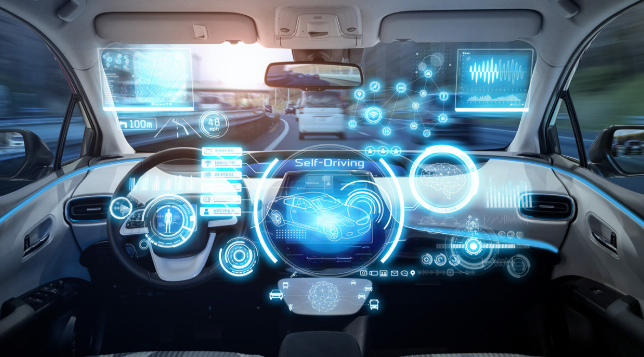
Self-driving cars rely on AI to fuse sensor data into a coherent map of the surroundings. Perception identifies lanes, objects, and obstacles; localization pins the vehicle to a precise position; mapping maintains awareness of dynamic and static elements. Decision systems translate perception into throttle, brake, and steering, while route planning chooses safe, efficient paths. Safety layers monitor performance and edge cases. The interplay between data quality, governance, and continuous learning leaves critical questions unresolved about reliability and accountability, which merit careful scrutiny.
Autonomous perception integrates sensing, interpretation, and localization to construct a coherent understanding of the vehicle’s surroundings. The subsystem aggregates data from diverse sensors, achieving sensor fusion that reconciles ranges, resolutions, and noise. It performs lane segmentation to delineate drivable space, while object recognition classifies obstacles and roadway features. Analytical fusion yields robust mapping, updating a consistent environmental model for reliable navigation and safety.
See also: techvantor
The decision layer translates perceptual outputs into concrete vehicle actions and route choices.
Predictive modeling integrates sensor data, maps, and context to forecast likely events and optimize maneuvers.
Planning modules evaluate alternatives under constraints, minimizing decision latency while preserving safety and efficiency.
Outputs translate into throttle, brake, steering, and routing commands, aligning with regulatory norms and rider expectations without unnecessary speculation.
How does AI keep passengers safe in autonomous driving? Safety systems integrate continuous monitoring, redundancy, and formal testing to ensure reliable operation.
Safety testing evaluates performance under varied conditions, while edge case handling addresses rare but critical scenarios.
The framework emphasizes fail-soft responses, graceful degradation, and provable guarantees, enabling predictable behavior and preserving freedom to travel without compromising safety.
Data, Feedback, and Continuous Optimization underpin how autonomous vehicles improve over time. Vehicles collect diverse telemetry, simulate scenarios, and update policies through iterative learning. Data governance ensures quality, provenance, and compliance across datasets, while model governance oversees versioning, validation, and auditable performance. The approach balances autonomy with accountability, enabling scalable improvements without sacrificing safety, legality, or transparency for users seeking freedom.
The question: how do self-driving cars handle ethical decision-making in crashes? They rely on predefined ethical frameworks and prioritization rules, emphasizing crash avoidance, minimizing harm, and transparent governance. Decisions reflect calibrated risk models and legal, societal, and safety constraints.
Astonishing as legends claim, AI-driven cars cannot truly feel emotions or possess genuine intuition. They perform emotion simulation and intuition inspired decisions based on data, rules, and learned patterns, delivering precise, rigorous, freedom-oriented behavior without conscious experience.
Autonomous cars face potential hacking risks, with criminals targeting control systems or data pipelines. Ethical concerns and data privacy must guide defenses, risk assessment, and governance to preserve safety while preserving user autonomy and freedom of movement.
Self-driving cars learn from passengers’ private data through anonymized, consented streams integrated into model training; data privacy safeguards, differential privacy, and encryption govern collection, storage, and usage, ensuring transparency, minimalism, and user autonomy while preserving analytic rigor.
Fully autonomous cars nationwide remain uncertain; regulators, manufacturers, and infrastructure must align. Timelines vary, but widespread consumer availability hinges on robust safety validation, data privacy protections, and mitigation of ethical bias, with gradual regional rollouts continuing beyond current forecasts.
Self-driving cars integrate perception, decision-making, and safety into a cohesive AI-driven system. By fusing camera, LiDAR, radar, and maps, they build accurate world models for robust planning and control. Critics may doubt real-time reliability, yet ongoing testing, edge-case handling, and continuous optimization demonstrate resilient performance under diverse conditions. While no system is flawless, the rigorous governance and iterative learning framework steadily advances safe, scalable autonomy for everyday road use.